 Veda Store

- Navodaya Vidyalaya Notes
- JNVST Class 6 EVS Notes
EVS Chapter 3
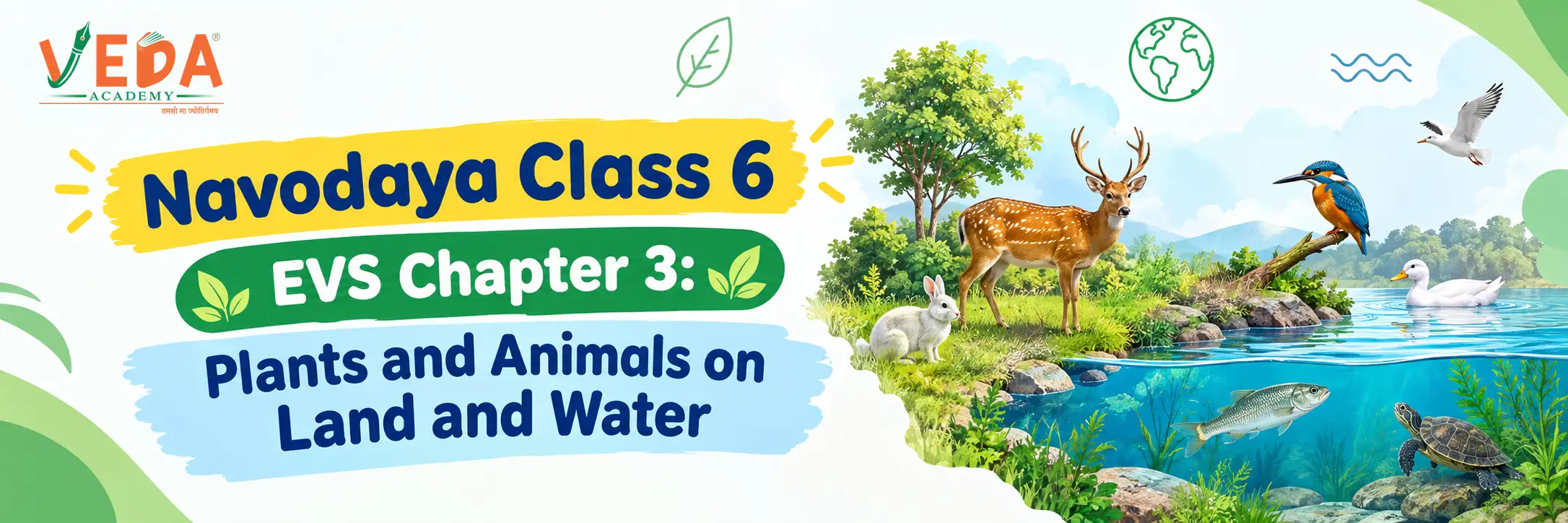
Navodaya Class 6 EVS Chapter 3: Plants and Animals on Land and Water
Nature is full of different plants and animals. However, they do not all live in the same place.
Some plants and animals live on land. Others live in water. Therefore, every living thing has special features that help it live in its home.
Navodaya Class 6 EVS Plants and Animals on Land and Water helps students understand these different homes. Moreover, this chapter teaches children about land animals, water animals, land plants, and water plants. So, let us explore the wonderful world of nature!
What will you learn in this chapter?
In Navodaya Class 6 EVS Plants and Animals on Land and Water, the students learn about the places where living things grow and live. You will understand a lot of things, such as
All the plants that grow on land. Plants that grow in water. Species of animals that live on land. Animals that live in water How animals move and find food How plants and animals adjust to their surroundings Therefore, this chapter makes EVS learning simple, fun, and interesting. A habitat is the natural home of a plant or animal. It gives living things food, water, air, and shelter. For example, a lion lives on land. On the other hand, a fish lives in water. Similarly, a lotus grows in water, while a mango tree grows on land. Thus, different living things need different habitats. In Navodaya Class 6 EVS Plants and Animals on Land and Water, students learn why every plant and animal needs a suitable place to live. Many plants grow on land. They get water from the soil and sunlight from the sun. For example, trees, shrubs, herbs, and grasses grow on land. Trees: Trees are big and strong plants. They usually have thick and hard stems called trunks. Moreover, trees provide us with fruits, shade, wood, and oxygen. There are various examples, including Mango tree Neem tree Banyan tree Coconut tree Shrubs: These are much smaller than trees. However, they have many branches near the ground. The examples of shrubs are as follows: Rose Hibiscus Cotton plant Herbs & Grasses: Herbs are small plants with soft stems. Similarly, grasses also grow close to the ground. Therefore, land plants come in many shapes and sizes. The examples are as follows: Mint Coriander Wheat Grass Some plants grow in ponds, lakes, rivers, and other water bodies. These plants are called aquatic plants. A common example is the lotus. It grows in water, but its leaves and flowers float on the surface. For example, Lotus, Water Lily, Hydrilla, and Duckweed. Some aquatic plants float on water. Meanwhile, others stay under the water. Thus, Navodaya Class 6 EVS Plants and Animals on Land and Water teaches students how plants can grow in different surroundings. Animals that live mainly on land are called terrestrial animals. They have body parts that help them move and live on land. For example, a dog uses its legs to walk and run. Similarly, a snake uses its body to crawl. Examples of land animals include: Lion Elephant Dog Cat Horse Camel Moreover, different animals have different body features. These features help them find food and stay safe. Animals that live in water are called aquatic animals. Fish have fins that help them swim. They also have gills that help them breathe in water. Other water animals include fish, whales, dolphins, octopuses, and crabs. Some animals, such as frogs, can live both on land and in water. Therefore, they are special animals with the ability to survive in more than one place. How Do Animals Move? Animals move differently. Their body parts help them move from one place to another. Therefore, the way an animal moves depends on its body structure and habitat. Examples are as follows: Birds fly with their wings. Fish swim with their fins. Snakes crawl using their bodies. Horses run using their legs. Frogs jump with their strong hind legs. This is an important topic in Navodaya Class 6 EVS Plants and Animals on Land and Water. Understanding EVS is important for the JNVST exam. However, students also need proper guidance, practice, and revision. Veda Academy provides structured learning support for students preparing for Navodaya Vidyalaya. The lessons are designed in a simple and easy-to-understand way. Moreover, students can learn important topics, practise questions, and improve their confidence. For students looking for the best online classes for Navodaya Vidyalaya Class 6 exam preparation, Veda Academy offers helpful learning resources and guided practice. Similarly, students searching for the best coaching for Navodaya Vidyalaya Class 6 JNVST preparation can use regular classes and practice material to strengthen their preparation. Therefore, with regular learning and practice, students can prepare better for the entrance exam. What are Habitats?
Plants that Grow on Land
Plants that Grow in Water
Animals that Live on Land
Animals that Live Under the Water
Prepare for the Navodaya Class 6 Exam with Veda Academy
EVS Chapter 3 PDF
Do You Need Help With Your Homework
Practice Navodaya Class 6 EVS Important Questions
Practice is an important part of JNV exam preparation. Therefore, students should revise every topic and solve different types of questions. Working on Navodaya Class 6 EVS important questions can help students understand the chapter better. Moreover, regular practice can improve speed, accuracy, and confidence. Students should also:
Read the chapter carefully.
Learn important words.
Make short notes.
Revise regularly.
Solve practice questions.
Check their answers.
Thus, daily practice can make EVS preparation easier and more effective.
Explore More EVS Chapters
After completing this chapter, students should continue learning other EVS topics as well.
For example, Navodaya Class 6 EVS Chapter 3 can help students build a strong understanding of important environmental topics. Students can also use a Navodaya Class 6 EVS Chapter 3 PDF for easy reading and revision.
Moreover, revising Navodaya Class 6 EVS Chapter 3 along with Navodaya Class 6 EVS Plants and Animals on Land and Water can help students connect different EVS concepts. Therefore, chapter-wise learning and regular revision can make JNVST preparation more organised. Nature is full of wonderful plants and animals. Some live on land, while others live in water. However, every living thing has special features that help it survive in its habitat. Navodaya Class 6 EVS Plants and Animals on Land and Water helps students learn about habitats, aquatic life, terrestrial life, movement, and adaptation in a simple way. Therefore, read the chapter carefully, remember the important points, and practise Navodaya Class 6 EVS important questions regularly. With proper guidance from Veda Academy, the best online classes for Navodaya Vidyalaya Class 6 exam preparation and regular practice through their best coaching for Navodaya Vidyalaya Class 6 JNVST preparation, students can build a strong base for the JNVST exam.Wrapping Up