 Veda Store

- Sainik School Notes
- AISSEE Language Notes class 6
CH-8 Tenses Forms
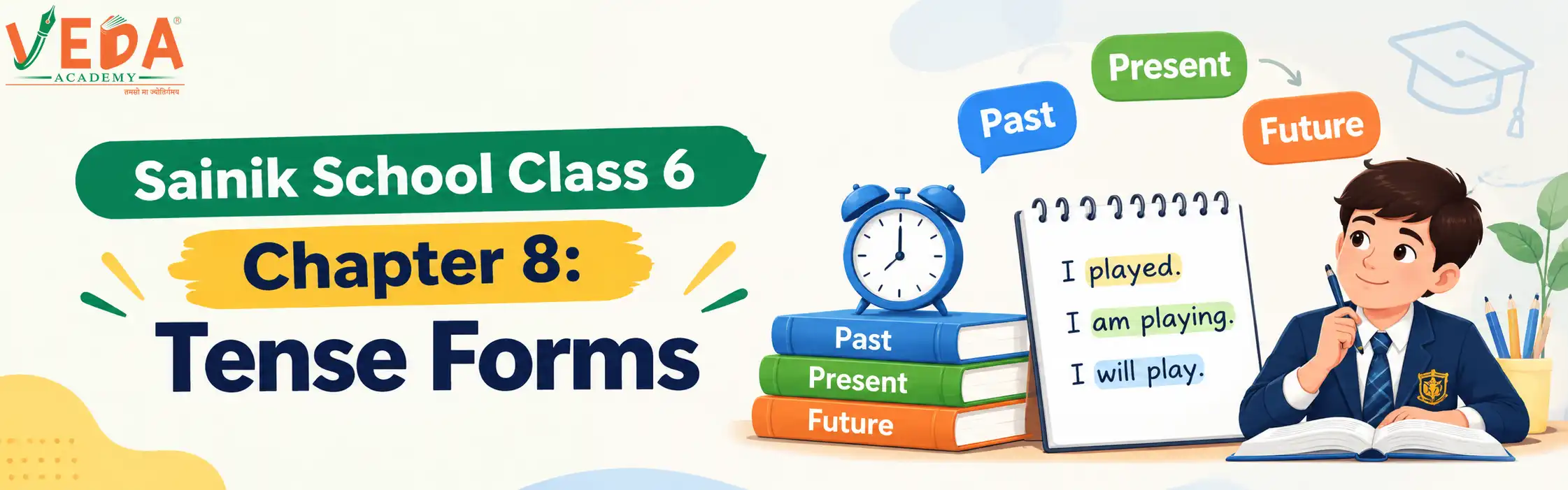
Chapter 8: Sainik School Class 6 English Tenses Forms in a Simple Explanation
Do you know how to talk about yesterday, today, and tomorrow in English? You might say, “I played cricket yesterday,” “I play cricket today,” or “I will play cricket tomorrow.” These sentences tell us when an action happens. We use tenses to show the time of an action. Sainik School Class 6 English Tenses Forms helps students speak and write correct English. Moreover, tenses make it easier to share ideas clearly. This chapter explains tenses with simple rules, easy examples, and practice questions.
If you are preparing for the Sainik School Class 6 entrance exam, these notes will help you build a strong base in English grammar. So, let us learn tenses step by step with Veda Academy!
CH-8 Tenses Forms PDF
Do You Need Help With Your Homework
What are tenses in English grammar?
Tenses are forms of verbs that show when an action happens. There are three main tenses:
Present tense: An action happens now or regularly.
Past tense: An action happened before now.
Future tense: An action will happen later.
The examples for the above-mentioned tenses are as follows:
Present: I play football.
Past: I played football.
Future: I will play football.
Notice how the verb changes to show the time of the action.
Also Check: How to Fill Sainik School Class 6 Admission Form 2027-28 Step-by-Step Online Application Guide
Present Tense
The present tense tells us about actions that happen now or regularly. It has four main forms.
Simple Present Tense: We use it for daily habits, facts, and regular actions. For Examples: I go to school every day. She reads a book. The sun rises in the east. Rule: Use the base verb with I, you, we, and they. Add s or es to the verb when the subject is he, she, or it. Present Continuous Tense: We use it for actions happening right now. For Examples: I am reading a book. He is playing cricket. They are watching TV. Rule: Use am, is, or are + verb ending in -ing. Present Perfect Tense: We use it for actions that are complete but still matter now. For Examples: I have finished my homework. She has eaten her lunch. They have reached school. Rule: Use has or have + the third form of the verb. Present Perfect Continuous Tense: We use it for actions that started earlier and are still going on. For Examples: I have been studying for two hours. She has been reading since morning. Rule: Use has or have been + verb ending in -ing. Also Check: Subject Wise Sainik School Class 6 Notes for Entrance Exam Preparation 2027 The past tense tells us about actions that happened before now. It also has four main forms, they are as follows: Simple Past Tense: We use it for actions that have already happened. For Examples: I played football yesterday. She visited her aunt. We watched a movie. Rule: Use the second form of the verb for most positive sentences. Past Continuous Tense: We use it for actions that were happening at a certain time in the past. For Examples: I was reading a story. They were playing outside. Rule: Use was or were + verb ending in -ing. Past Perfect Tense: We use it for an action that happened before another past action. For Examples: I had eaten before he arrived. She had finished her work before dinner. Rule: Use had + the third form of the verb. Past Perfect Continuous Tense: We use it for an action that continued for some time before another past event. For Examples: I had been waiting for an hour before the bus came. He had been studying for two hours when I called. Rule: Use had been + verb ending in -ing. Also Check: Sainik School Class 6 Syllabus 2027 Complete Subject-Wise Syllabus and Exam Pattern The future tense tells us about actions that will happen later. There are four types of Future tense. Simple Future Tense: We use it for actions that will happen in the future. For Examples: I will visit Delhi tomorrow. She will help her mother. Rule: Use will + the base verb. Future Continuous Tense: We use it for actions that will be happening at a future time. For Examples: I will be studying at 7 PM. They will be playing tomorrow morning. Rule: Use will be + verb ending in -ing. Future Perfect Tense: We use it for actions that will be complete before a future time. For Examples: I will have finished my homework by 6 PM. She will have reached home by noon. Rule: Use will have + the third form of the verb. Future Perfect Continuous Tense: We use it for actions that will have continued for a period of time by a future point. For Examples: By noon, I will have been studying for three hours. By June, she will have been living here for a year. Rule: Use will have been + verb ending in -ing. There are various practise questions for the students who are appearing for the Class 6 Sainik School Exams. Therefore, go through these practise questions and find out where you stand: Choose the correct options. Veda Academy aims to make online education and learning simple by providing lessons and practice resources. In addition, regular revision can help students improve their grammar skills and build confidence. If you are searching for the best online classes for Sainik School preparation, explore Veda Academy's learning resources. Students can study important topics and practise at their own pace. Moreover, a regular study plan can help them prepare for the entrance exam. Choose Veda Academy if you are looking for the best online coaching for Sainik School exams. They provide mock tests, important questions, PYQs, and model papers for better preparation of the students. Start learning today and take another step towards your goal!Past Tense
Future Tense
Practise Questions from Class 6 Sainik School Tenses Notes
Prepare with Veda Academy the Best Online Coaching for Sainik School Exams