 Veda Store

- Navodaya Vidyalaya Notes
- JNVST Class 6 EVS Notes
EVS Chapter 16
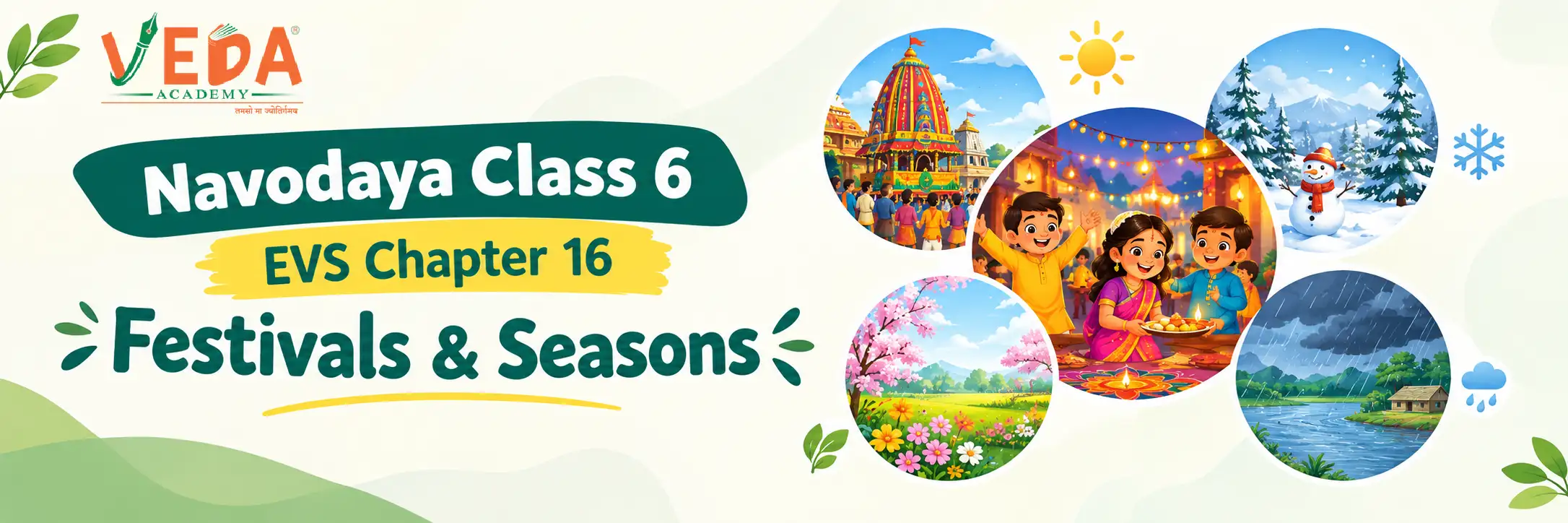
Navodaya Class 6 EVS Chapter 16: Festivals & Seasons in a Simple Way
Navodaya Class 6 EVS Festivals & Seasons is an interesting topic for students preparing for the Navodaya Vidyalaya Class 6 entrance exam. It helps students learn about festivals, seasons, food, clothes, and the way people live. Moreover, this topic shows how nature and culture are linked with our daily lives.
India is a land of many cultures and traditions. Therefore, people celebrate many festivals during the year. In the same way, India has different seasons. Each season brings changes in the weather, food, clothes, and activities of people. However, Veda Academy provides the best online classes for Navodaya Vidyalaya Class 6. They offer the best resources for JNV preparation, such as JNVST notes, mock tests, important questions, and model papers,
What are festivals?
Festivals are special days that people celebrate with joy. They may be linked to religion, culture, nature, or important events. For example, people celebrate Diwali, Holi, Eid, Christmas, Baisakhi, Pongal, and Onam.
During festivals, people often clean and decorate their homes. They also wear new clothes, prepare special food, and meet family members. In addition, people may visit places of worship and take part in local events. However, festivals are not only about fun. They also teach us about sharing, kindness, respect, and unity. Thus, festivals bring people together.
Navodaya Class 6 EVS: Festivals in India
In different regions of India, many different festivals are celebrated. For example, Pongal is widely celebrated in Tamil Nadu, while Baisakhi is an important festival in Punjab. Similarly, Onam is celebrated with great joy in Kerala.
Some festivals are linked with nature and farming. For instance, harvest festivals thank nature for a good crop. Therefore, farmers often celebrate them after collecting their crops. Also, many festivals have special foods and customs. As a result, students can learn about India's rich culture by studying festivals.
EVS Chapter 16 PDF
Do You Need Help With Your Homework
What are seasons?
A season is a period of time when the weather is in the same pattern. India experiences 4 seasons, i.e., summer, winter, autumn, and spring. However, the number and length of seasons can vary from one region to another.
In summer, the days are usually hot. People wear light cotton clothes and drink more water. Furthermore, fruits such as mangoes and watermelons are common during this time. Next comes the rainy season. During this season, many parts of India receive rainfall. Plants grow well because they get enough water. However, heavy rain can sometimes cause floods. After that, winter brings cooler weather. People wear woollen clothes to stay warm. Also, many places have fog and cold winds during winter.
Spring comes with pleasant weather in many parts of India. Flowers bloom, and new leaves grow on trees. Therefore, spring is often called a beautiful season.
How do seasons affect Our Lives?
The change of seasons affects our daily lives in many ways. First, it changes the clothes we wear. For example, we wear cotton clothes in summer and woollen clothes in winter. Next, seasons affect our food. During hot weather, people often prefer light and cooling foods. In winter, warm foods and drinks are common.
Seasons also affect farming. Farmers choose crops according to the weather and amount of rainfall. For example, some crops need more water, while others grow well with less water. Moreover, seasons can affect festivals. Many festivals are connected with crops, weather, or nature. Thus, learning about Navodaya Class 6 EVS Festivals & Seasons helps students understand these links.
Navodaya Class 6 EVS Festivals & Seasons
Festivals and seasons are closely connected. For example, many harvest festivals are celebrated after crops are ready. Pongal, Baisakhi, Onam, and Makar Sankranti are examples of festivals linked with farming and nature.
Similarly, some festivals are celebrated during particular times of the year. Therefore, students should learn both the festival and the season in which it is celebrated. This connection makes Navodaya Class 6 EVS Festivals & Seasons an important topic for young learners. It also helps students understand how people live in different parts of India.
Why is the Navodaya Class 6 EVS Festivals & Seasons Chapter important in the JNVST examination?
Navodaya Class 6 EVS Chapter 16 helps students understand Indian culture and seasonal changes. In addition, it develops their general awareness. For entrance exam preparation, students should revise important facts about festivals, seasons, food, clothes, farming, and weather. They should also practise Navodaya Class 6 EVS important questions. Furthermore, regular practice can make learning easier. Students can use books, practice worksheets, mock tests, model papers, and online lessons for better preparation.
Students looking for the best online classes for Navodaya Vidyalaya Class 6 must join Veda Academy, where they teach lessons that explain concepts in simple language. Likewise, being the best coaching for Navodaya Vidyalaya Class 6, offering regular tests, clear explanations, and proper study support.
Navodaya Class 6 EVS Festivals & Seasons—Quick Pointers
Students who are preparing for JNV exams should know these pointers, which will come in handy:
Festivals are special days celebrated by people.
India has many festivals because it has many cultures.
Seasons bring changes in weather.
Summer is usually hot.
The rainy season brings rainfall.
Winter is usually cold.
Spring often brings pleasant weather and flowers.
Seasons affect clothes, food, farming, and daily activities.
Many harvest festivals are connected with farming and nature.
Festivals teach us sharing, respect, and unity.
Wrapping Up
Navodaya Class 6 EVS Festivals & Seasons helps students learn about India's festivals, seasons, nature, and daily life. It also explains how weather and farming are linked with celebrations.
Therefore, students should read the topic carefully and revise the key points. At the same time, solving Navodaya Class 6 EVS important questions can improve confidence. With simple learning, regular revision, and practice, students can understand Navodaya Class 6 EVS Chapter 16 more easily.
Veda Academy also provides a store where students & parents can purchase the practise papers. These practise papers are prepared according to the JNV syllabus. They are replicas of the exam papers that come in the real exam. Therefore, by practising them, the students can easily gain confidence for the examinations.