 Veda Store

- Navodaya Vidyalaya Notes
- JNVST Science Notes class 9
Reproduction in Animals
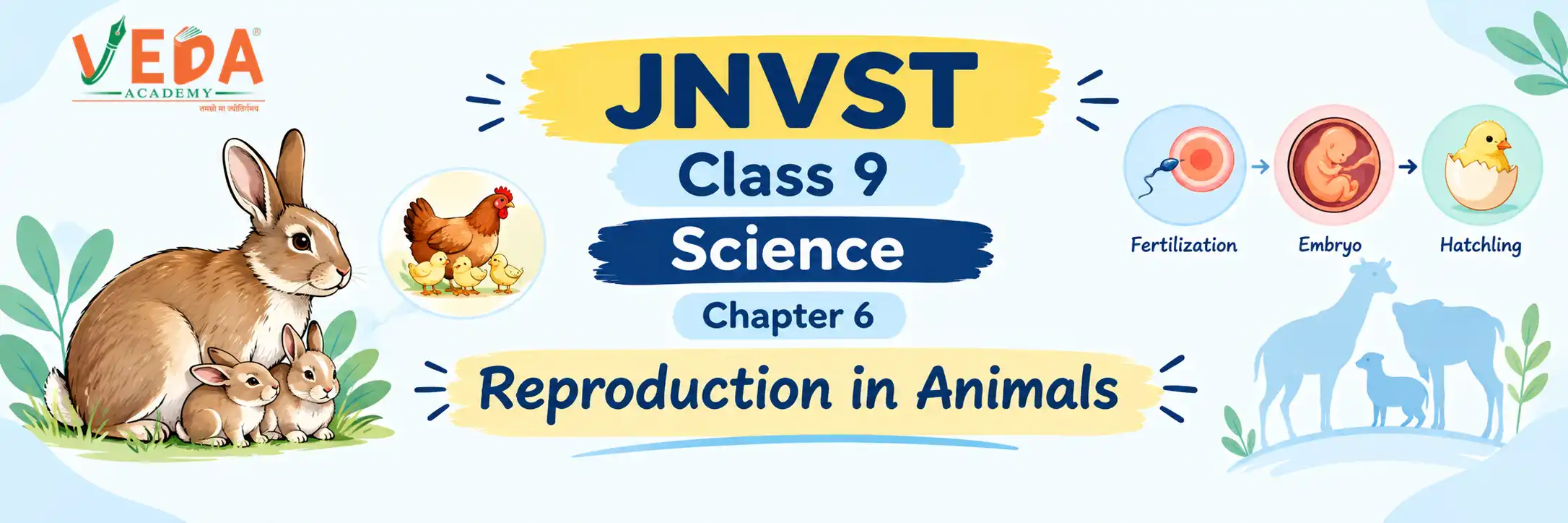
JNVST Class 9 Chapter 6: Science Reproduction in Animals
Science becomes more interesting when students understand the world around them. JNVST Class 9 Science Reproduction in Animals is one such chapter. It explains how animals produce young ones and how new life develops. From sperm and eggs to fertilisation and zygote formation, students can learn each concept step by step. The chapter also explains oviparous animals, viviparous animals, and metamorphosis.
Good preparation needs more than reading a chapter once. Students also need proper study material, practice, and revision. Veda Academy supports students with JNVST Class 9 Science study material prepared according to the JNV syllabus. The resources are designed to make important concepts easier to learn and revise. Students can also practise JNVST Class 9 Science questions to check their understanding.
Students can learn important topics from home and follow a structured preparation plan. For learners searching for Navodaya Class 9 online coaching or the best online classes for Navodaya Class 9 exam preparation, choose Veda Academy. Veda Academy provides quality study material such as mock test, model papers, notes, important questions, and PYQs for exam preparation.
What Is Reproduction?
Reproduction is the process by which living things produce new young ones. It helps living things continue their species. For example, a cow gives birth to a calf. A hen lays eggs that can develop into chicks. Similarly, a dog gives birth to puppies. Reproduction is important because every living thing has a limited life span. Thus, new organisms are needed to continue life on Earth.
Also Check: Navodaya Class 9 Syllabus 2027 Subject-Wise Complete Syllabus
Reproduction in Animals PDF
Do You Need Help With Your Homework
Types of Reproduction in Animals
There are two main types of reproduction:
Asexual reproduction
Sexual reproduction
Asexual Reproduction: In asexual reproduction, only one parent is needed. The young organism usually looks very similar to the parent. For example, Hydra can reproduce by a process called budding. A small bud grows on the body of Hydra. Later, it separates and becomes a new Hydra. Thus, asexual reproduction is a simple process because it does not need two parents.
Sexual Reproduction: In sexual reproduction, two parents are usually involved. A male parent and a female parent produce special reproductive cells. The male reproductive cell is called the sperm. The female reproductive cell is called the egg or ovum. When the sperm joins the egg, fertilisation takes place. As a result, a new cell called a zygote is formed. This is an important part of JNVST Class 9 Science Reproduction in Animals and should be learned carefully.
Also Check: How to Choose the Best Coaching for Navodaya Vidyalaya Class 9 Admission
Male and Female Reproductive Cells
The male reproductive cell is called a sperm. It is very small and can move with the help of its tail. On the other hand, the female reproductive cell is called an egg or ovum. It is larger than a sperm and does not move like a sperm. When a sperm and an egg join, they form a zygote. The zygote then grows and develops into a new organism. Therefore, students should remember:
Sperm = male reproductive cell Egg/Ovum = female reproductive cell Sperm + Egg = Zygote These points are useful for JNVST Class 9 Science questions. Fertilisation is the process in which a male reproductive cell joins with a female reproductive cell. The sperm joins the egg during this process. Then, a zygote is formed. The zygote divides many times and slowly develops into an embryo. Fertilisation can happen inside or outside the body. Internal Fertilisation: When fertilisation takes place inside the female body, it is called internal fertilisation. For example, humans, cows, dogs, and hens show internal fertilisation. External Fertilisation: When fertilisation takes place outside the female body, it is called external fertilisation. For example, frogs and fish usually show external fertilisation. They release their reproductive cells into water. After fertilisation, the zygote starts dividing. It gradually develops into an embryo. Embryos develop in the body of the female in the case of many animals like humans. They get nutrition from the female body. After development for some time, the baby is born. But there are some animals that lay eggs. In such animals, the embryo develops inside the egg. A hen is one such animal that lays eggs. Animals can also be grouped according to how they give birth. Oviparous Animals: Animals that lay eggs are called oviparous animals. Examples include: Hen Frog Fish Lizard Butterfly The young one develops inside the egg. Viviparous Animals: Animals that give birth to young ones are called viviparous animals. Examples include: Human beings Cow Dog Cat Elephant The young one develops inside the mother's body. This difference is useful during JNVST Class 9 Science exam preparation. Some animals change their body form as they grow. This change is called metamorphosis. Frogs are a common example. Frogs lay their eggs in water. These eggs change into tadpoles. Tadpoles look quite different from adult frogs. The tadpoles then grow legs and lose their tails. Therefore, the life stages of a frog are important for JNVST Class 9 Science revision. Good preparation needs the right study plan and regular practice. Veda Academy’s JNVST Class 9 Science coaching provides the students with easy learning material prepared as per the JNV syllabus. The students can practice using chapter-wise notes, practice problems, revision materials, and many other JNVST Class 9 Science study materials. Veda Academy’s JNV Online Coaching Classes can also assist students who want to learn from the comfort of their home. The classes have been planned in such a way that even the tough subjects become very easy to understand. Thus, those students searching for the best online coaching for Navodaya Class 9 can try out Veda Academy's study materials. Click Here: To Join Live Class 9 JNVST Preparation Classes 2027What Is Fertilisation?
Development of the Baby Animal
Oviparous and Viviparous Animals
Metamorphosis
Prepare for JNVST Class 9 Science with Veda Academy